Valid Motor Vehicle Power of Attorney Form for the State of California
The California Motor Vehicle Power of Attorney form serves as a vital tool for individuals who wish to delegate authority regarding their motor vehicle to another person. This legal document allows the designated agent to perform various tasks on behalf of the vehicle owner, such as signing documents for title transfers, registering the vehicle, and handling other related transactions. By utilizing this form, vehicle owners can ensure that their interests are represented even when they are unable to attend to these matters personally. It is essential to understand the specific powers granted, as well as the responsibilities of both the principal and the agent. Additionally, the form must be completed accurately and signed in accordance with California law to be valid. Understanding these key aspects can make the process of managing motor vehicle transactions smoother and more efficient.
PDF Specifics
| Fact Name | Description |
|---|---|
| Purpose | The California Motor Vehicle Power of Attorney form allows an individual to designate another person to handle motor vehicle transactions on their behalf. |
| Governing Law | This form is governed by California Vehicle Code Section 5600 et seq. |
| Signatures Required | The form must be signed by the principal (the person granting authority) and may require notarization for certain transactions. |
| Duration of Authority | The authority granted remains in effect until it is revoked or the purpose for which it was created is fulfilled. |
| Specific Transactions | It can be used for various transactions, including title transfers, registration, and obtaining duplicate titles. |
| Revocation | The principal can revoke the power of attorney at any time by providing written notice to the agent and any relevant parties. |
| Agent's Responsibilities | The agent is expected to act in the best interest of the principal and must keep accurate records of all transactions conducted on their behalf. |
How to Write California Motor Vehicle Power of Attorney
Filling out the California Motor Vehicle Power of Attorney form is a straightforward process. This form allows you to designate someone to act on your behalf regarding your vehicle. The following steps will guide you through the completion of the form to ensure it is filled out correctly.
- Begin by obtaining the California Motor Vehicle Power of Attorney form. You can find this form online on the California Department of Motor Vehicles (DMV) website or at your local DMV office.
- Carefully read the instructions provided with the form to understand what information is required.
- In the first section, enter your name and address. Make sure to use your full legal name as it appears on your vehicle title.
- Next, provide the name and address of the person you are granting power of attorney to. This person will be referred to as your agent.
- Fill in the vehicle information. This includes the make, model, year, and vehicle identification number (VIN) of the vehicle in question.
- Specify the powers you are granting to your agent. You may choose to give them full authority or limit their powers to specific tasks, such as signing documents or transferring ownership.
- Sign and date the form at the bottom. Your signature must match the name you provided at the beginning of the form.
- If required, have your signature notarized. Some situations may necessitate a notary public to witness your signature.
- Finally, make copies of the completed form for your records and provide a copy to your agent.
Once you have completed these steps, your form is ready to be used. Make sure your agent understands their responsibilities and the scope of the authority you have granted them.
California Motor Vehicle Power of Attorney Example
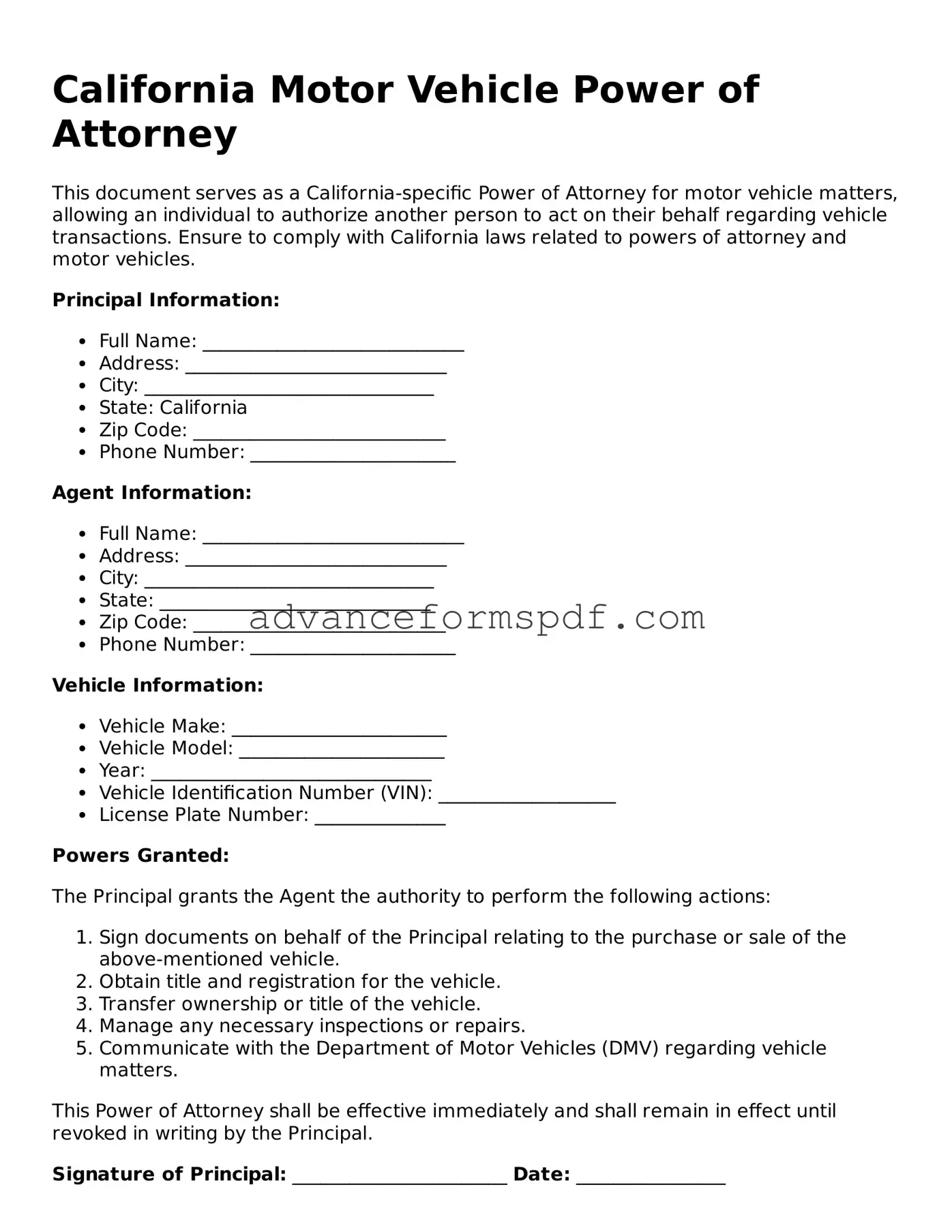
California Motor Vehicle Power of Attorney
This document serves as a California-specific Power of Attorney for motor vehicle matters, allowing an individual to authorize another person to act on their behalf regarding vehicle transactions. Ensure to comply with California laws related to powers of attorney and motor vehicles.
Principal Information:
- Full Name: ____________________________
- Address: ____________________________
- City: _______________________________
- State: California
- Zip Code: ___________________________
- Phone Number: ______________________
Agent Information:
- Full Name: ____________________________
- Address: ____________________________
- City: _______________________________
- State: _____________________________
- Zip Code: ___________________________
- Phone Number: ______________________
Vehicle Information:
- Vehicle Make: _______________________
- Vehicle Model: ______________________
- Year: ______________________________
- Vehicle Identification Number (VIN): ___________________
- License Plate Number: ______________
Powers Granted:
The Principal grants the Agent the authority to perform the following actions:
- Sign documents on behalf of the Principal relating to the purchase or sale of the above-mentioned vehicle.
- Obtain title and registration for the vehicle.
- Transfer ownership or title of the vehicle.
- Manage any necessary inspections or repairs.
- Communicate with the Department of Motor Vehicles (DMV) regarding vehicle matters.
This Power of Attorney shall be effective immediately and shall remain in effect until revoked in writing by the Principal.
Signature of Principal: _______________________ Date: ________________
Signature of Agent: _______________________ Date: ________________
Witness Information:
- Name: ____________________________
- Signature: ______________________
- Date: ___________________________
Other Motor Vehicle Power of Attorney State Forms
Power of Attorney Requirements by State - The Motor Vehicle Power of Attorney allows an individual to designate someone to act on their behalf regarding vehicle-related matters.
A Non-disclosure Agreement (NDA) is a legal contract that establishes a confidential relationship between parties, ensuring that sensitive information remains protected. In Arizona, this form is essential for businesses and individuals who wish to share proprietary information without the risk of it being disclosed to unauthorized entities. For those looking to create such agreements, resources such as Arizona PDF Forms provide vital assistance in understanding the nuances of the Arizona Non-disclosure Agreement that can help safeguard your intellectual property and maintain your competitive edge.